Ribbit Rogue Getting Started
From the first roll to a pool that can finish area one.
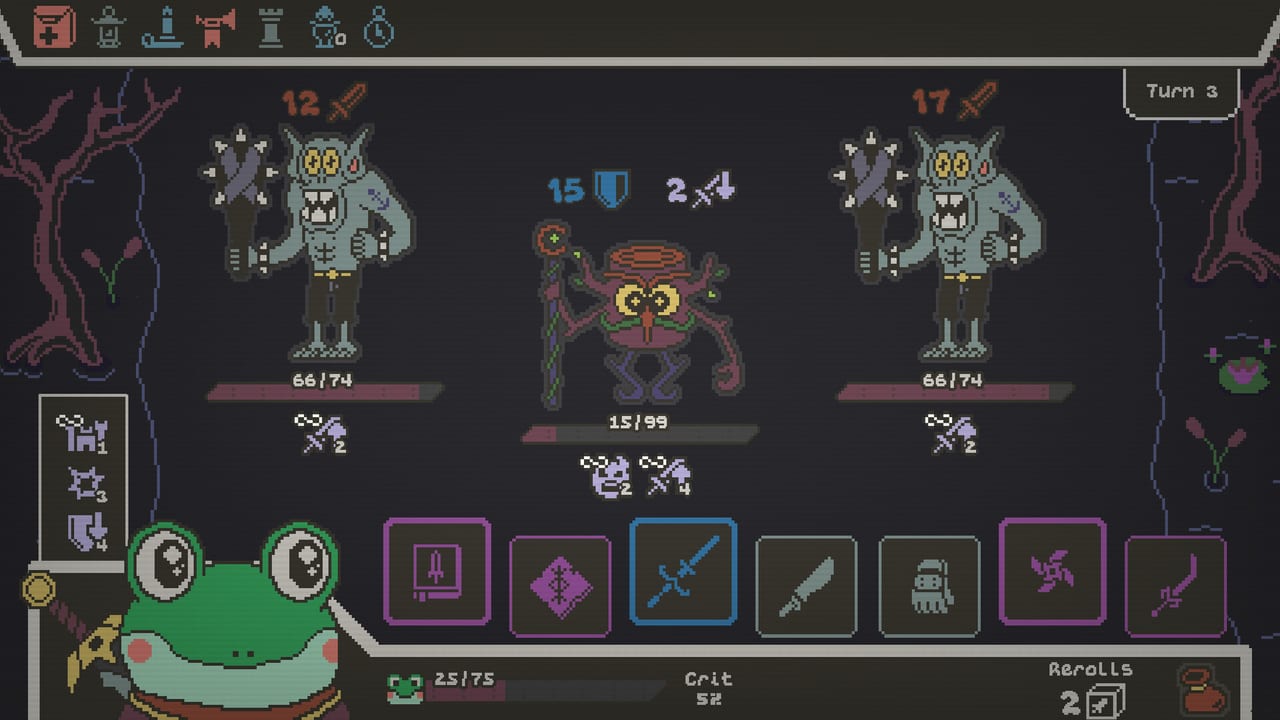
Ribbit Rogue looks like a luck game until you treat the ten-die cap as a budget. Steam 1.0, launched on 3 September 2026, is a single-player, turn-based dice deckbuilder from King Krab Games. You reclaim a corrupted swamp with a frog adventurer, a pouch of dice, and relics that rewrite the math. This page is the first-hour plan: what the tutorial is really teaching, which rewards to take, and when to open combat or forging instead of slamming every elite.
What you are actually building
You do not build a fifty-card deck. You keep ten dice. After a fight you may add a new die only by cutting one you already own, unless you merge a duplicate into an upgrade. Each die has six sides. Some sides are blanks. Blanks are not flavor — they are wasted actions unless a relic such as Spirit Jar pays you for rolling them. The Steam store line is honest: if all else fails, hope luck is on your side. The wiki version is: delete luck from as many faces as you can before the first boss.
The Hero, the green frog in the launch screenshots, restores hit points after battles. Demo recordings showed a 75 HP bar and a five-point post-fight heal on the starter. Later screenshots show other frogs in a wizard hat and in armor — Steam 1.0 ships three characters, each with a starting relic and some unique dice. Play the Hero first. Unlock the others after you understand rerolls, not before.
The turn, in one paragraph
Draw seven of your ten dice. Choose four to roll. Spend rerolls on blank faces or on a face that does not answer the enemy telegraph. Then spend the four results in an order that respects Quick (stronger if used first), Slow (stronger if it is the last remaining die), and Twin (the action happens again). Crits double the number on the face, including shields and heals. Inspect with Shift. Reroll with right click on mouse. Full details live in the combat guide and the controls page.
First rewards: keep a job, not a trophy
After each fight you pick a die or skip for gold. Early Steam screenshots show a chest with a Claymore, a shield, and a staff, plus a Skip (+20G) button. Skipping is correct when every option is a blank-heavy curiosity that does not match your pool. Taking a four-star Rapier with a 15 attack face is correct even if another face is a blank — you will forge that blank later.
A useful early pool has:
- One reliable attack die (hatchet, rapier, quarterstaff, claymore).
- One shield die (buckler, kite shield, or a cursed ring that still rolls block).
- One small heal or a relic that refunds HP after combat.
- Room for a weird die you intend to strip for parts at the forge.
Do not fill all ten slots with “interesting” faces. Empty slots are not a failure; they are future merges.
Shops, gold, and Herc
The swamp has eccentric shopkeepers. One official screenshot labels Herc’s Shop, a beetle merchant who sells dice in the 40G–75G range and offers a Donate hook. Gold also drops from fights and from skipped rewards. Swamp Depth, the harder ladder, cuts gold from combat and raises shop prices, so a sloppy first shop on Depth is how runs starve. On the base difficulty, buy the die that fills a missing job, not the prettiest rarity stars.
If the shop shows a Cursed Ring with two blank faces and a fat 18 shield, ask whether you already own Blacksmith Hammer or a nearby forge. Blanks become a project, not a personality.
Map nodes you should not skip
The map is not a straight hallway. You will see fights, elites, forges, fishing holes, campsites, and odd events such as a giant crab with Gold / Dice / Relic tracks. Some splits roll three dice: 11 or higher takes the top option. That is not a vibe check — it is a resource bet. Early on, prefer a forge over a mystery if your pool still has two blanks you could swap onto one sacrificial die. The map and events guide walks the node types.
XP from fights feeds level-up relic choices. Launch screenshots show three-card relic picks such as Spirit Jar, Fine Cutlery, and Cracked Sword. Take the relic that matches the pool you already have, not the relic that would be strong on a different character. Relic rankings live on the relic tier list.
A first-run route that does not throw
- Play the Hero. Learn Shift inspect and right-click reroll before you touch Swamp Depth.
- Keep one shield die through the first elite.
- Visit a forge as soon as you have a duplicate or a blank you hate. Swap sides or spend the three upgrade points; do not leave the node “to think about it.”
- Bank enough gold for one shop restock instead of buying the first 40G junk die.
- Enter the first boss with a plan from bosses, not with ten unupgraded faces.
What “winning the hour” looks like
You do not need a complete build on run one. You need a pool that answers telegraphs, a relic that does something every fight, and a mental list of which die is bait. If a face only works when it is the first action, put Quick on it and stop rolling it last. If a face only works as a finisher, protect Slow. Twin wants copies of the same action, which is exactly what side-swaps are for.
Steam includes 32 achievements, Steam Cloud, and full controller support. None of those replace a clean pool. When you can finish area one without panic-rerolling every blank, move to the dice tier list and the run planner. That is the end of getting started and the start of actually playing Ribbit Rogue.
Frequently Asked Questions
Quick answers to the most common questions.
How many dice can I hold in Ribbit Rogue?
Ten. New dice replace an existing one unless you merge a duplicate. Treat every reward as a cut decision, not a collection quest.
Should I play Swamp Depth on my first Steam run?
No. Beat a base-difficulty run first. Depth buffs enemies, cuts combat gold, and raises shop prices.
Does the Steam demo carry into 1.0?
Demo unlocks for dice and relics were described as carrying into the full game during the Next Fest period. Confirm in your Steam cloud save, then follow demo notes.
Is Ribbit Rogue multiplayer?
No. It is single-player with controller support. There is no co-op.